
Growing in Faith: Michaelmas - Honoring St. Michael the Archangel
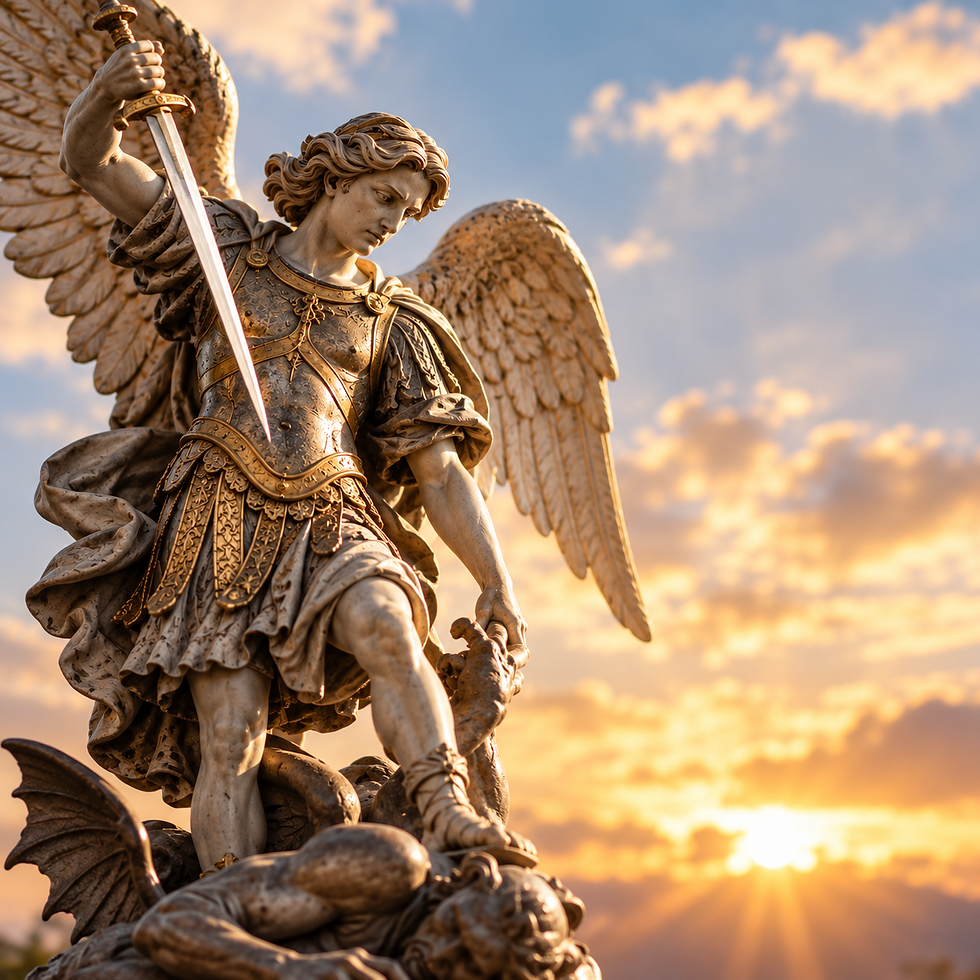
Each year on September 29, the Catholic Church celebrates the Feast of the Archangels Michael, Gabriel, and Raphael. This day is traditionally known as Michaelmas, a celebration especially associated with St. Michael the Archangel.
St. Michael’s name means “Who is like God?” He is honored in Scripture as a powerful protector and defender of God’s people. In the Book of Revelation, St. Michael leads the angels in battle against the forces of evil, reminding us that God’s goodness and truth ultimately triumph.
For centuries, Catholics have turned to St. Michael for protection and courage. He reminds us that we, too, are called to stand firmly for what is good, true, and holy—even when doing so requires courage.
At our school, Michaelmas offers a beautiful opportunity to remind our students that they are never alone. God surrounds us with His love and sends His angels to guide and protect us. As we celebrate St. Michael, may we ask for his intercession and strive to follow his example by choosing courage over fear, truth over falsehood, and goodness over evil. St. Michael the Archangel, pray for us!
Saint Michael FAQ
Origins of the Feast
Originally, September 29 marked the dedication of the Church of Saint Michael in Rome, built by Constantine. From those earliest days, the date became fixed in Catholic devotion as the great annual celebration of Heaven's most powerful warrior.
What Does Scripture Say?
Apocalypse (Revelation) 12:7-9 - "And there was a great battle in heaven, Michael and his angels fought with the dragon, and the dragon fought and his angels: And they prevailed not, neither was their place found any more in heaven. And that great dragon was cast out, that old serpent, who is called the devil and Satan, who seduceth the whole world; and he was cast unto the earth, and his angels were thrown down with him"
Saint John recounts the great battle in Heaven, when the wicked angels under Lucifer revolted against God, and how Michael, leading the faithful angels, defeated the hosts of evil and drove them out. Saint John speaks of the great conflict at the end of time, which also reflects the battle in heaven at the beginning of time.
Origins of the Saint Michael Prayer
In one of the prayer’s most common origin stories, Pope Leo XIII saw a horrific vision after celebrating mass, causing him to faint. What Pope Leo XIII heard and saw has been disputed, but it led him to compose the St. Michael prayer. Some accounts say he heard a conversation between Satan and God, with Satan telling God that he only needed 100 years to destroy the Church.
Father Domenico Pechenino, who witnessed Pope Leo XII faint, said, “His expression was one of horror and awe; the color and look on his face changing rapidly. Something unusual and grave was happening in him.”
After fainting, Pope Leo wrote the prayer and requested that it be printed and sent to all the ordinaries around the world. Whatever Pope Leo saw moved him enough to install the prayer. For more than 100 years, billions of Catholics all around the world have recited it.
Something fun!
In the northern and western islands of Scotland, there was long-abiding devotion to the Archangel, and an ancient tradition of eating on his feast a Saint Michael's Bannock. This large, flat cake, cooked on a "girdle" (griddle), is a big first cousin to a scone.
If you’re interested in making a Saint Michael’s Bannock here is the recipe: https://allthehousehold.com/st-michael-and-all-angels-bannock-recipe/


